What Is Online Reputation Management (And Why It Matters More Than Ever)
Online reputation management used to mean pushing bad results to page two. AI search changed everything. Here is how ORM actually works in 2026, why review sites now feed LLMs, and a practical framework for building a reputation that AI cannot misrepresent.
📝 DRAFT: This post is not published yet. Only you can see it via this direct link.
I first wrote about online reputation management in 2019. Back then, the playbook was straightforward: monitor your Google results, respond to bad reviews, maybe pay an agency to push negative articles to page two where nobody looks.
That version of ORM is dead.
It died the moment AI search engines started synthesising everything the internet knows about your brand into a single paragraph. There is no page two in ChatGPT. There is no “below the fold” in an AI Overview. When someone asks Perplexity whether your company is trustworthy, the answer is pulled from reviews, Reddit threads, news articles, and forum posts, condensed into a few sentences, and presented as fact.
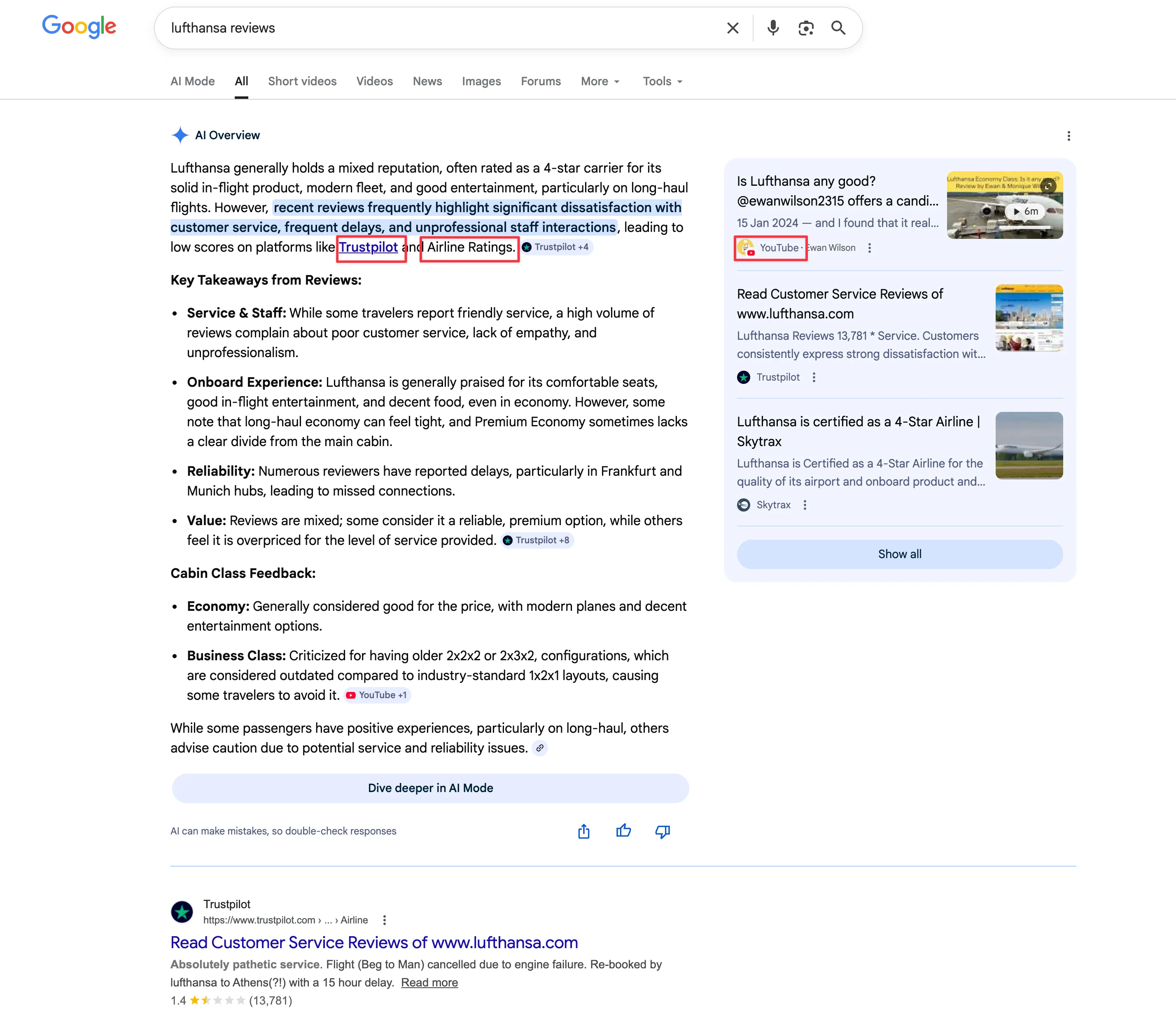
You cannot suppress an AI answer. You cannot bury it with SEO tricks. You can only make sure the inputs are overwhelmingly in your favour.
That is what reputation management means now.
What is online reputation management?
Online reputation management (ORM) is the practice of monitoring, influencing, and shaping how a business or individual is perceived on the internet. It covers search results, social media, review platforms, forums, news coverage, and increasingly, what AI search engines say about you.
The definition has not changed much since 2019. The landscape underneath it has changed completely.
Your reputation used to live in a handful of places: your website, your social profiles, maybe a few review sites. Now it is spread across dozens of surfaces, many of which you do not control and some of which are generating answers about your brand using AI models trained on data you never saw.
Where your reputation actually lives in 2026
This is not your 2019 ORM landscape. The surfaces have multiplied, and several new ones did not exist (or did not matter) five years ago.
Traditional search results still matter. Your branded SERP (what appears when someone Googles your company name) is still the front door for most buyers doing due diligence. But it is no longer the only door, and it is not even the first one for a growing number of people.
AI search engines are the new front door for millions. ChatGPT, Perplexity, Google Gemini, and Google’s AI Overviews synthesise information about your brand from across the web and present it as a direct answer. No list of links. No option to scroll past the bad results. Just a paragraph that either says good things about you or doesn’t.
Review platforms have become AI training data. This is the shift most businesses have not clocked yet. Google Reviews, Trustpilot, G2, Capterra, Glassdoor, they are not just feedback channels anymore. They are input sources for LLMs. Every review about your business is a data point that shapes what AI models believe about you and what they tell the next person who asks.
Reddit is now a search engine surface. Google started surfacing Reddit threads directly in search results in 2024, and the volume has only increased. Threads discussing your brand, written by anonymous users you cannot influence, now appear on page one for your brand name. The conversations happening on Reddit about you are no longer buried in a niche forum. They are front and centre.
Short-form video amplifies complaints at scale. A single TikTok or Instagram Reel about a bad customer experience can reach millions within hours. Text complaints were bad enough. Video complaints with emotional delivery, real footage, and an algorithm designed to push controversy are exponentially harder to manage.
Employees are reputation vectors. Glassdoor reviews and LinkedIn posts from current and former staff shape public perception in ways that used to be invisible. Your employer brand is now inseparable from your consumer brand. A 2.8 star rating on Glassdoor does not just hurt recruiting. It hurts sales.
Why trying to remove negatives is a losing game
The old ORM playbook had 3 moves
1. Suppress bad results with SEO.
2. Send legal letters demanding takedowns.
3. Create enough positive content to push negatives to page two.
That worked when reputation lived in a ranked list of 10 blue links. Page two of Google might as well not exist. If you could get the bad stuff there, you were safe.
AI search broke that model.
When ChatGPT generates an answer about your brand, it is not showing you a ranked list. It is synthesising from everything it has been trained on. A negative article buried on page four of Google can still influence what the model says about you. A scathing Reddit thread from three years ago is training data. A single viral complaint that you thought had been forgotten is part of the corpus. That’s not the worst part. Most LLMs use web search to gather information and use them for grounding (As a source of truth from trusted platforms and websites like Trustpilot) to give the final answer.
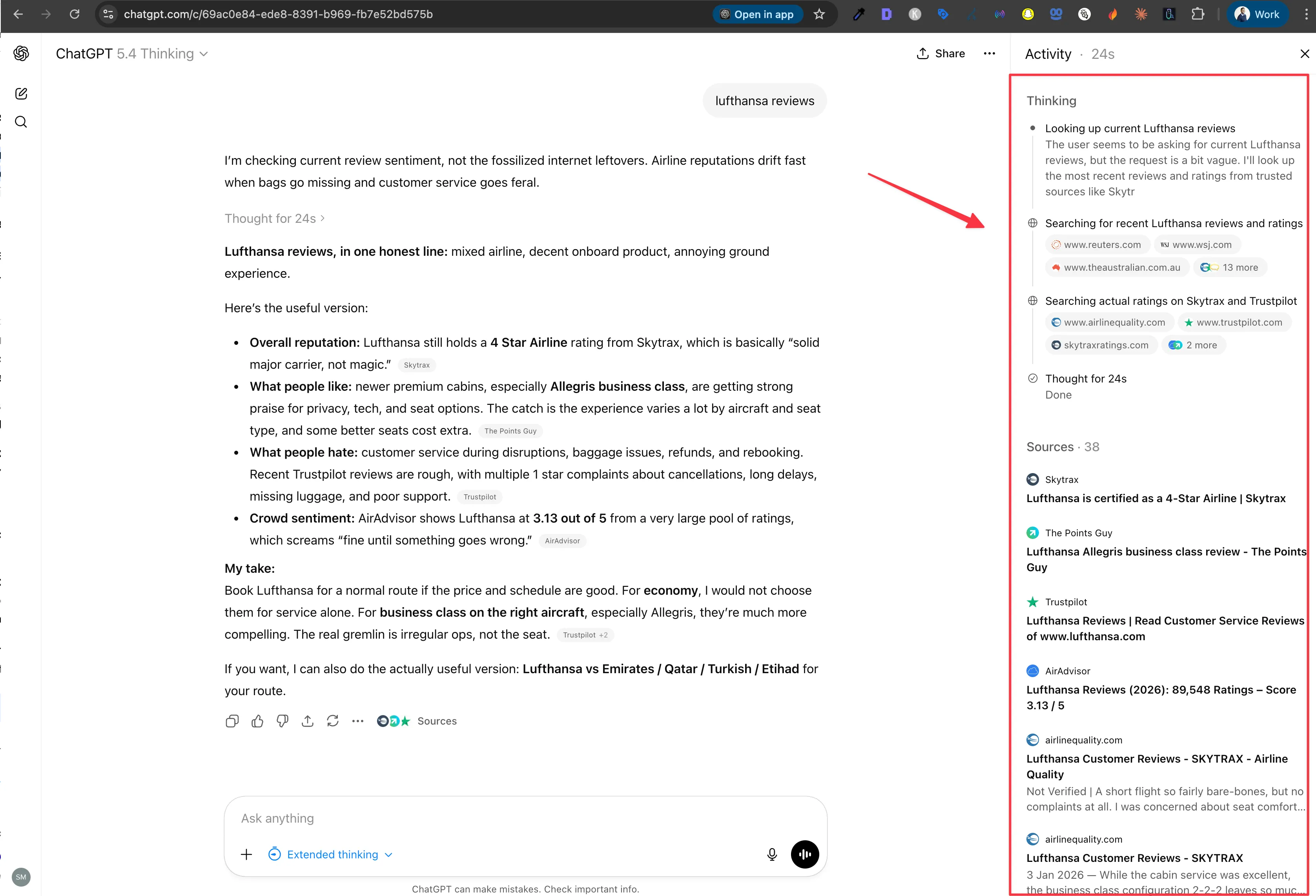
You cannot suppress an AI summary. You cannot send a legal letter to a language model.
The strategy that works is overwhelm, not suppress. If 95% of the content about your brand is positive, specific, and authoritative, the remaining 5% becomes statistical noise. The AI summary reflects the weight of evidence, and you need that weight on your side.
This means:
- 200 genuine positive reviews outweigh 15 negative ones in any AI synthesis.
- A steady stream of authoritative content (press coverage, case studies, expert commentary) dilutes the impact of a single bad article.
- Active participation in the communities where people discuss your brand (Reddit, LinkedIn, industry forums) creates positive data points that AI models consume.
Stop trying to make the bad stuff disappear. Start making the good stuff overwhelming.
Review sites now feed AI search (this changes everything)
Most businesses understand that reviews affect buying decisions. Fewer understand that reviews now directly shape what AI tells people about their brand.
Here is what is happening. Large language models are trained on web data that includes review aggregators. When someone asks ChatGPT “is [company] good?” or “best [category] tools”, the model draws from Google Reviews, Trustpilot, Quora, Reddit discussions, and any other source where people have written about their experience. AI Overviews in Google explicitly cite review platforms in their generated answers.
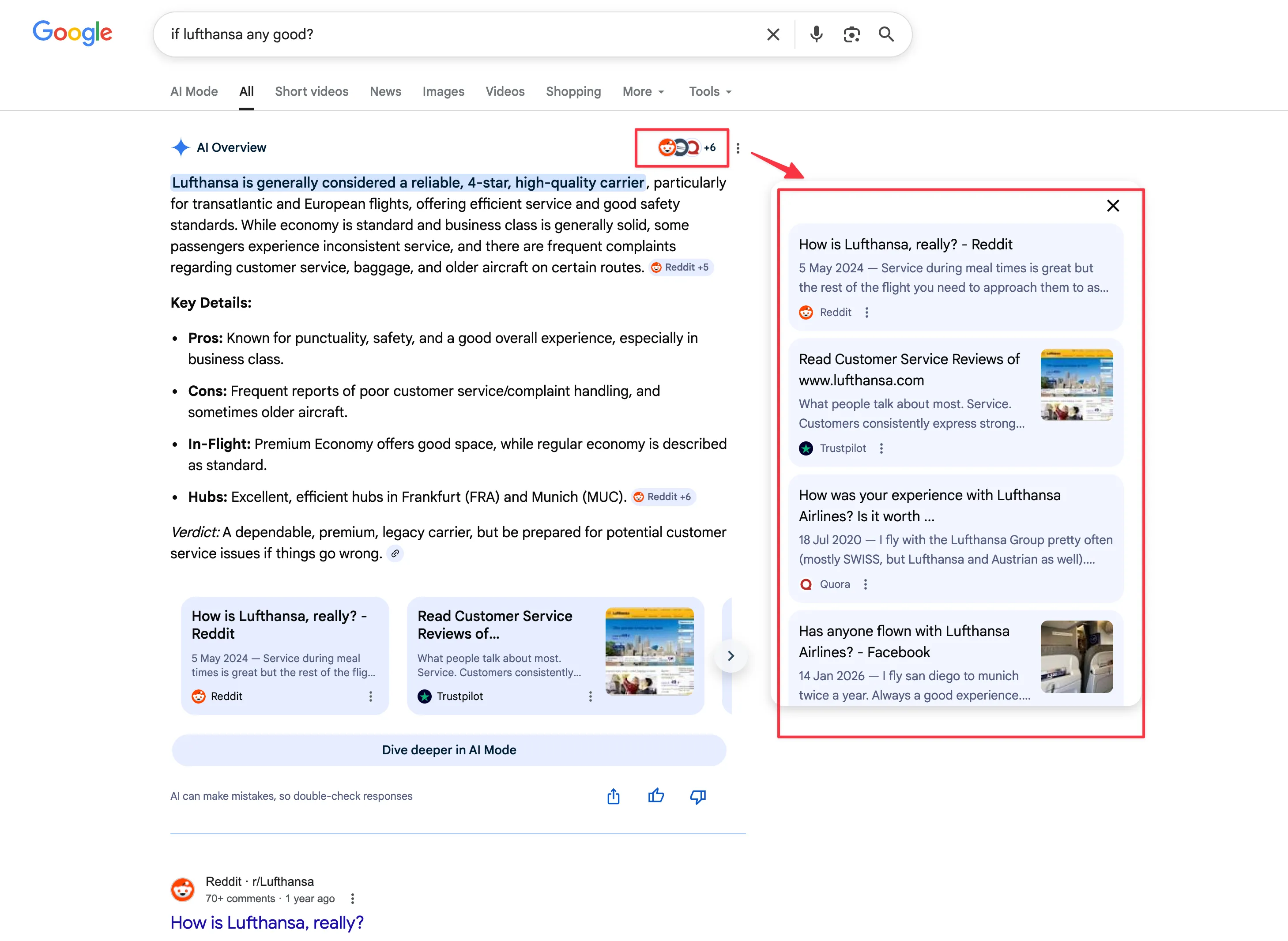
This means every review you earn (or fail to earn) is a permanent data point in AI models.
Think about the implications. A company with 500 Google Reviews averaging 4.7 stars has a fundamentally different AI reputation than a company with 12 reviews averaging 3.2. It is not just that the second company looks worse on Google Maps. It is that AI models, drawing from that data, will describe the first company more favourably in every generated answer for years to come.
Reviews are no longer ephemeral feedback. They are AI training data. Treat them accordingly.
This is what review management looks like when you understand the AI angle:
Volume matters more than perfection. You do not need a perfect 5.0 (which actually looks suspicious). You need a large volume of genuine reviews that AI models can draw from. A business with 300 reviews at 4.4 stars has a more resilient AI reputation than one with 20 reviews at 4.9.
Respond to every review. Your responses are also training data. A thoughtful response to a negative review (“We looked into this and here is what we changed”) creates a positive signal that models can reference.
Diversify your review platforms. If all your reviews are on Google, your AI reputation is built on a single source. Spread across Google, Trustpilot, G2, Capterra, and industry-specific platforms. More sources means more data points for AI models to draw from.
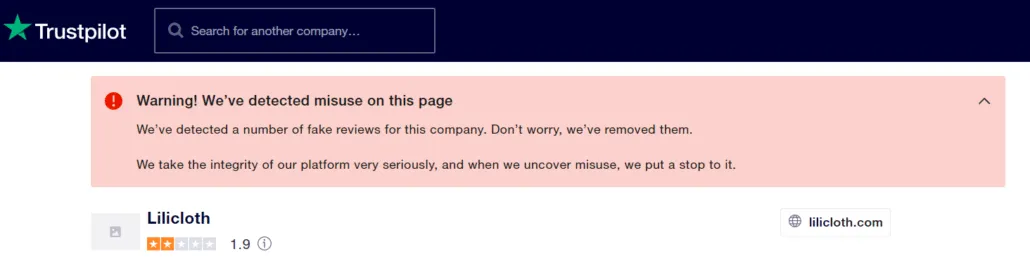
Never fake reviews. Platforms are increasingly good at detecting manufactured reviews, and the penalty (a “review manipulation” flag on your listing) is worse than having fewer reviews. More importantly, fake reviews create false training data that will eventually be contradicted by real experiences, making your AI reputation inconsistent.
Your brand in AI search: the new frontier
Here is something you should do this week: open ChatGPT, Perplexity, and Google Gemini. Ask each one about your business. Ask “what is [your company]?” Ask “is [your company] good?” Ask “best [your category] companies.”
Read what comes back.
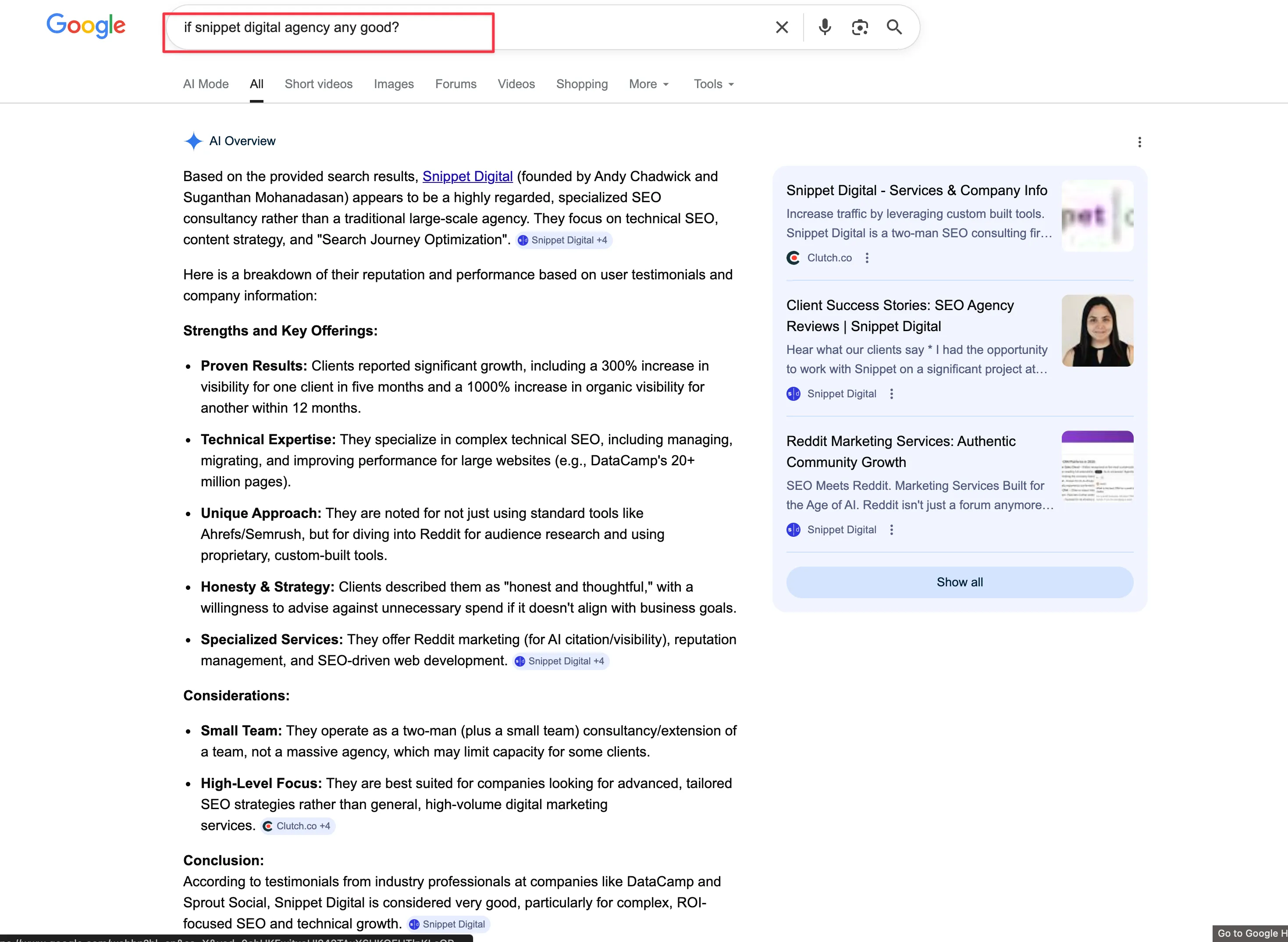
For most businesses, this is the first time they have ever checked their AI reputation. And for many, it is a shock. The answers might be inaccurate, outdated, or worse, drawing from a single negative source that disproportionately influences the output.
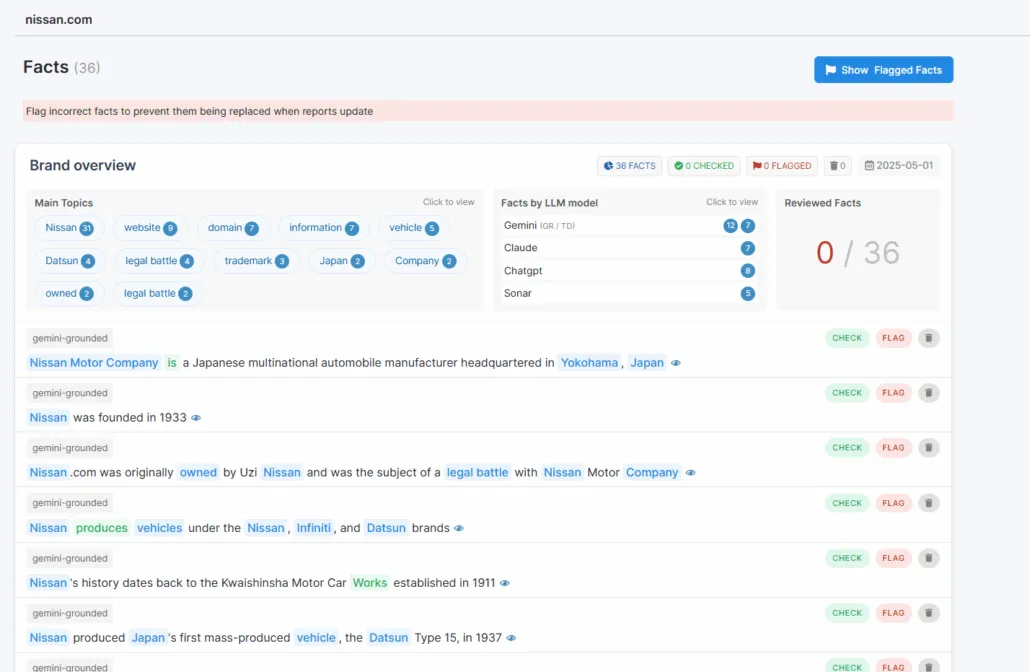
AI hallucinations are a real threat. LLMs sometimes fabricate information about businesses. Your company might be described inaccurately, associated with controversies that never happened, or confused with a competitor. Because AI answers are presented confidently and often without source links, users tend to believe them. You can use a tool like Waikay to check what LLMs know about your brand and using their fact checker you can find out any misunderstandings and correct them.
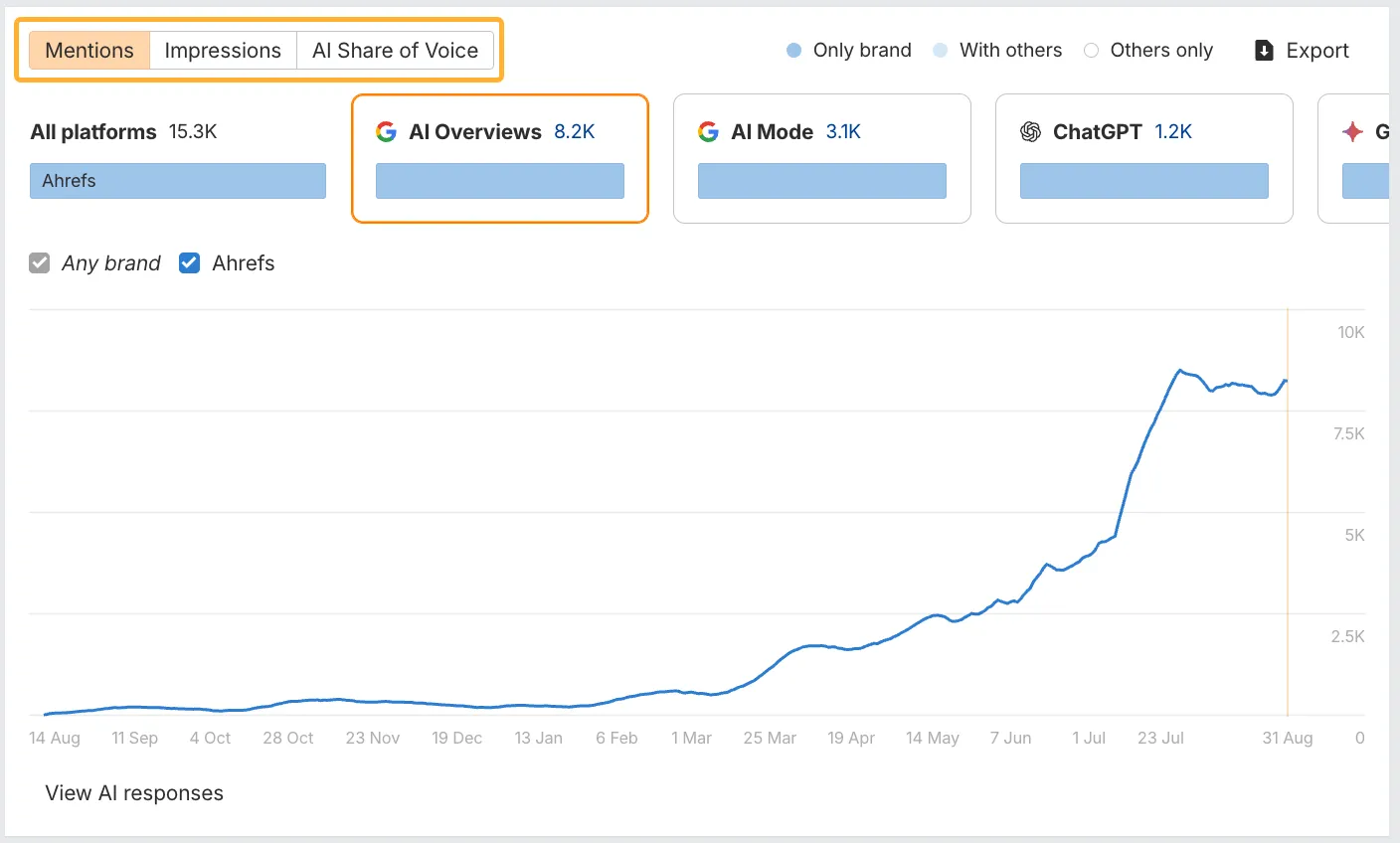
Monitoring tools exist now. Ahrefs Brand Radar tracks how your brand is mentioned across different LLMs. It shows you the prompts where your brand appears, the responses generated, and the sources cited. This is not a nice-to-have anymore. It is the equivalent of checking your Google results, but for AI search.
You can influence what AI says about you. Not through manipulation, but through creating clear, well-structured, authoritative content that AI models can draw from. Structured data (Schema markup) helps models understand your business accurately. (There is a big discussion going around this subject where people have ran experiments debunking LLM crawlers not parsing schema JSON) A Wikipedia page (if you are eligible) carries significant weight. Consistent NAP (name, address, phone) data across the web reduces the chance of AI confusing you with another entity.
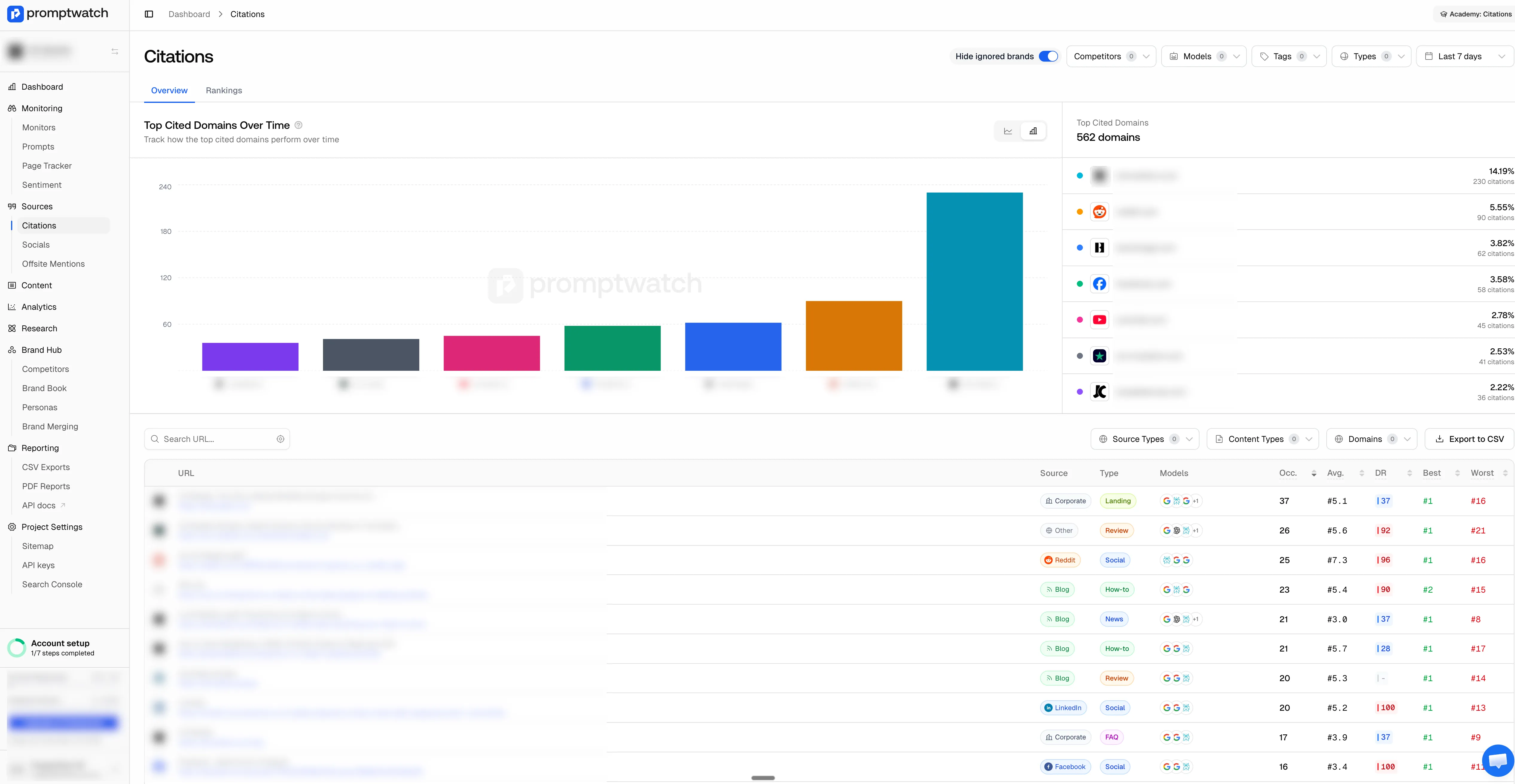
The citation graph matters. When AI Overviews or Perplexity generate answers, they often cite specific pages. Those cited pages have disproportionate influence on the answer. Understanding which of your pages (or competitor pages, or review pages) get cited for brand-related queries tells you exactly where to focus your content efforts. You can use tools like Promptwatch for this.
When ORM goes wrong: three case studies
Some of the best lessons in reputation management come from companies that got it spectacularly wrong. These examples are from a few years ago, but the principles behind them are timeless.
McDonald’s and the rogue tweet
In March 2017, McDonald’s official Twitter account posted a tweet directed at the President of the United States. Within minutes it had thousands of retweets and spawned the hashtag #BoycottMcDonalds.
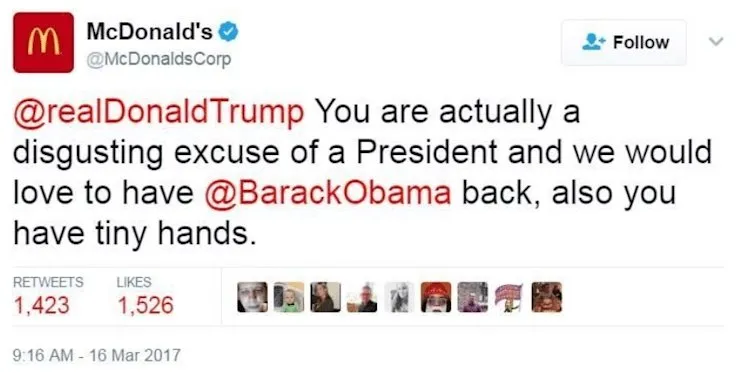
The company blamed a hack from an external source and deleted the tweet within hours. The damage was already done. The hashtag spread and dragged in unrelated criticisms about workers’ rights and nutrition.
The lesson is not about social media. It is about security. Account security is reputation security. Every person with login access to your brand accounts is a potential vulnerability. Audit access quarterly. Use two-factor authentication on everything. The reputational cost of a single compromised account can dwarf the inconvenience of tighter security.
Pepsi targets Cristiano Ronaldo
Before a 2013 World Cup qualifier between Sweden and Portugal, Pepsi’s Swedish marketing agency ran social media adverts depicting Cristiano Ronaldo as a voodoo doll being thrown on train tracks and hit with Pepsi cans.

Popular with Swedish fans, sure. But Ronaldo had hundreds of millions of followers worldwide. Portuguese fans created a Facebook group called “I will never drink Pepsi again” that hit 130,000 members within a day. Pepsi pulled the campaign and issued a public apology.
The lesson: your audience is global even when your campaign is local. A regional marketing team making decisions for a local audience can create a global reputation crisis overnight. Approval chains exist for a reason.
(For those interested: Portugal won the match 3 to 2. Ronaldo scored all three.)
Dove’s Facebook ad
In October 2017, Dove posted a Facebook ad showing a black woman removing her shirt to reveal a white woman underneath. Taken from a longer video that made no such comparison, the still images went viral and drew immediate accusations of racism.
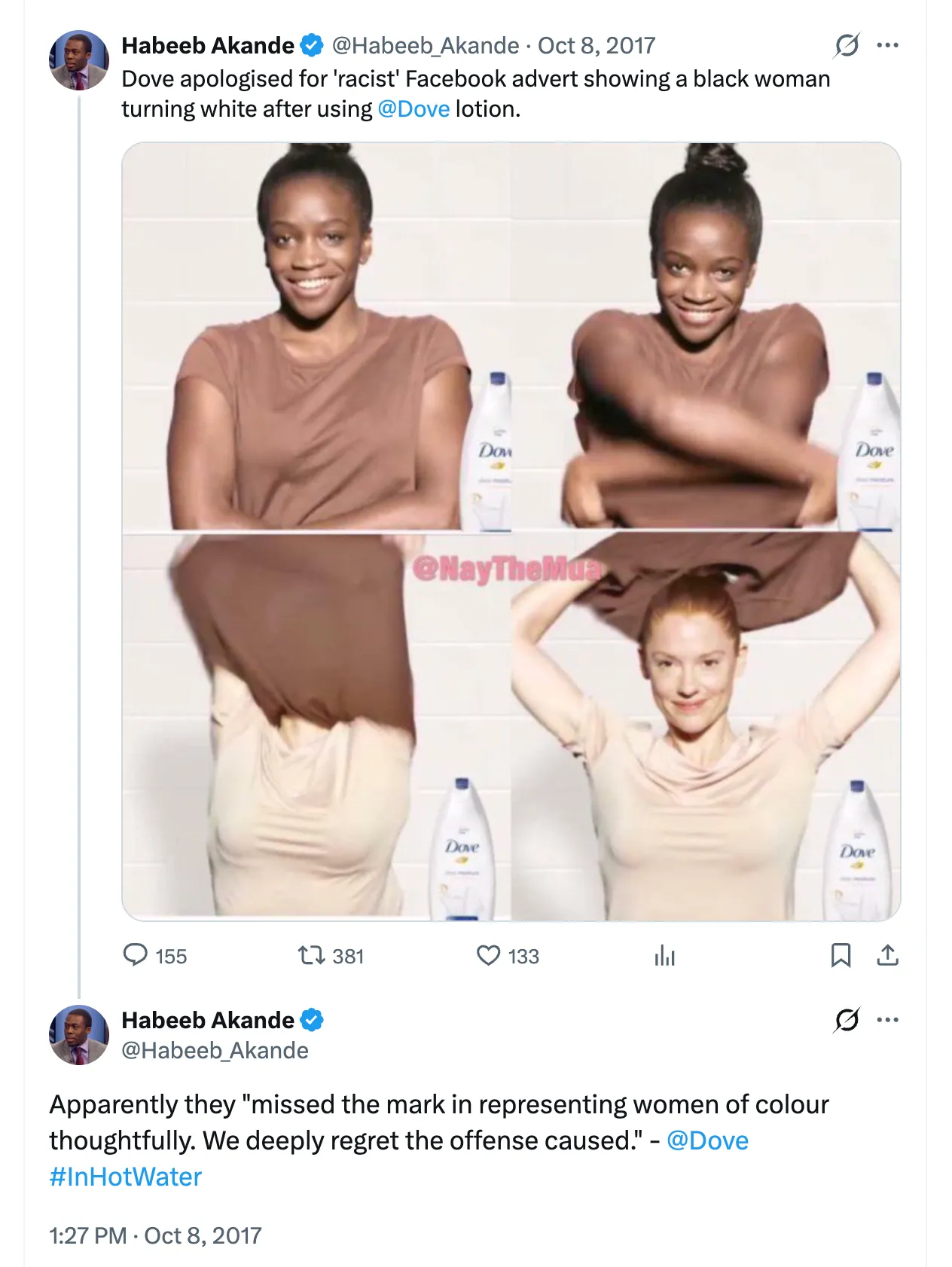
Dove apologised, saying they “missed the mark in thoughtfully representing women of colour.” The damage was amplified by social media users pointing out similarities to racist soap advertisements from the early 20th century.
The lesson is about context collapse. Every piece of content will be screenshotted, cropped, and shared without its original framing. In 2026, with AI-generated screenshots and manipulated clips, this risk has only grown. If a single frame of your ad can be misinterpreted, it will be.
A practical ORM framework
This is not a list of tips. It is a framework, ordered by priority.
Monitor everything, everywhere
Set up monitoring across every surface where your brand appears. This is not optional.
Search engines: Google Alerts is free but limited. For serious monitoring, Brand24, Mention, or Brandwatch provide real-time alerts across web, social, and news.
AI search: Use Ahrefs Brand Radar, Promptwatch or manually check ChatGPT, Perplexity, and Google AI Overviews monthly. AI answers change as new content is indexed. What the models say about you today might be different from what they said three months ago.
Social platforms: Track mentions across X, LinkedIn, TikTok, Instagram, and Facebook. Do not neglect platform-specific search. TikTok search is massive for brand discovery among younger demographics.
Review platforms: Google Reviews, Trustpilot, G2, Capterra, Glassdoor. Set up notifications for new reviews on every platform relevant to your industry.
Reddit and forums: Google Alerts can catch some of this, but dedicated monitoring for Reddit mentions is worth the investment given how prominently Reddit now appears in search results. (F5bot is great for monitoring Reddit)
Own your digital presence
Claim accounts on every major platform, even ones you do not actively post on. This prevents impersonation and squatting.
Audit who has admin access to every account. Former agencies, contractors, employees who left two years ago. If they still have login credentials, revoke them. Do this quarterly.
Claim and verify your Google Business Profile. Keep it updated with photos, hours, and accurate contact information. An incomplete or outdated Business Profile is a missed reputation signal.
Build the moat (overwhelm, don’t suppress)
The best long-term reputation strategy is creating a volume of positive, authoritative content that makes any negative content irrelevant by comparison.
Publish genuinely useful content. Not keyword-stuffed SEO filler. Articles, guides, and case studies that establish expertise and give AI models accurate information to draw from.
Build personal brands for key people. Active LinkedIn presence for founders and senior team members amplifies the company brand. Personal authority transfers to business authority.
Earn press coverage and guest contributions. Third-party mentions from reputable publications carry more weight (both in search rankings and in AI training data) than anything you publish on your own site.
Structure everything with Schema markup. Organization schema, review schema, FAQ schema. This helps search engines and AI models understand your business accurately and reduces the chance of hallucinations.
Manage reviews like AI training data
Respond to every review. Positive reviews deserve a genuine thank you. Negative reviews deserve a thoughtful, non-defensive response. Never argue publicly.
Make it easy to leave reviews. After a positive interaction, send a follow-up email with a direct link to your review page. Timing matters: ask within 24 hours of a positive experience while it is still fresh.
Do not buy or fake reviews. The short-term gain is not worth the long-term risk. A “review manipulation” warning badge on your Google listing, or a Trustpilot flag, will damage your reputation more than having fewer reviews ever could.
Handle negatives head on
When you find negative mentions, your response matters more than the original complaint.
Acknowledge the issue. Do not dismiss or deflect.
Solve publicly, then go private. “I’m sorry to hear about this. I’ve sent you a DM so we can sort this out” is the template. The public sees that you responded quickly and took it seriously. The resolution happens privately.
Document patterns. If the same complaint surfaces repeatedly, it is not a reputation problem. It is a product or service problem. Fix the root cause. No amount of ORM can paper over a genuinely bad experience that keeps happening.
Create a crisis response plan before you need one
Every business should have:
- A designated spokesperson authorised to respond publicly. Not someone who needs three levels of approval before posting.
- Pre-approved response templates for common scenarios: product issues, data breaches, negative press, viral social media complaints.
- An escalation process so the right people are informed within minutes, not hours. When something goes viral, the window for effective response is measured in minutes.
- A post-mortem process so every incident becomes a learning opportunity rather than something everyone tries to forget.
Turn customers into advocates
Loyal customers are the most credible reputation asset you have. Not because you pay them to say nice things, but because genuine advocacy carries a weight that marketing cannot replicate.
Referral programmes that reward introductions. Community spaces (Slack groups, Discord servers, private LinkedIn groups) where your best customers interact with each other. User-generated content campaigns that give people a reason to share their experience publicly.
The goal is making it natural for people who already like your brand to say so in places where it counts, which in 2026 means places that AI models can read.
When you need more than a framework
Everything above is what you can do yourself. Monitor, respond, build content, manage reviews, show up in the right places.
But some situations need more than a framework. A page-one crisis. A competitor running a negative SEO campaign against your brand. A Trustpilot profile dominated by complaints that are burying your conversions. A branded SERP that looks hostile before anyone even reaches your website.
We handle this at Snippet Digital. Branded SERP audits, suppression strategies, positive asset creation, and multi-platform monitoring across search and AI. If your online reputation is actively costing you business, that is what we do.
The moat is built before the storm
The businesses that weather reputation crises are never the ones scrambling to respond after the fact. They are the ones that spent months or years building a volume of positive signals, a library of authoritative content, and a base of customers who will vouch for them without being asked.
Online reputation management in 2026 is more complex than it was when I first wrote about this. The surfaces have multiplied. AI has added threat vectors that did not exist. The speed at which information and misinformation spreads has accelerated again.
But the core principle is simpler than ever: make the good stuff so abundant that the bad stuff does not matter.
Start now. The AI models are already forming their opinion.
You might also like
Stay in the loop
I'll email you when I publish something new. No spam. No fluff.
Join other readers. Unsubscribe anytime.

Entrepreneur & Search Journey Optimisation Consultant. Co-founder of Keyword Insights and Snippet Digital.